Research
The Role of Gender in Behçet's Disease: Insights from the International AIDA Registry
A large-scale study investigates how gender impacts the clinical manifestations and organ damage in Behçet’s Disease
Link to article
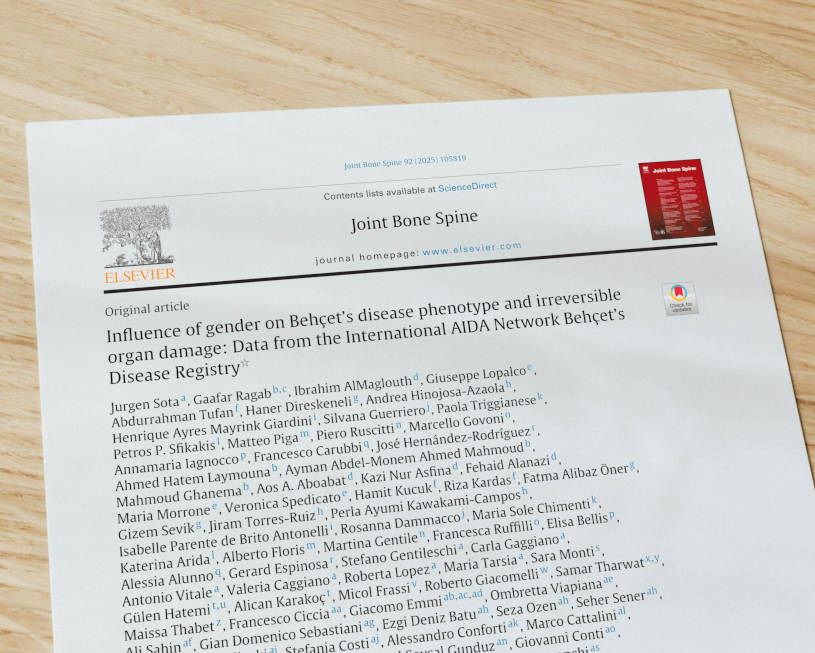
An original study from the International AIDA Network sheds light on how gender influences Behçet's disease (BD). Analyzing data from 1024 patients, researchers found that men face a more severe disease course with higher irreversible organ damage and greater ocular and vascular involvement, with a significantly higher Behçet's syndrome Overall Damage Index (BODI) compared to women. In contrast, women are more likely to experience joint, gastrointestinal, and central nervous system issues.
The study also revealed that male patients, despite shorter disease duration and faster diagnoses, accumulate more damage over time. Hormonal factors, such as testosterone, may play a role, affecting immune responses and vascular complications. Interestingly, gender-specific clusters were identified, with men more frequently falling into ocular and vascular phenotypes.
While offering real-world insights, the study notes limitations like potential referral bias and a lack of standardized follow-up protocols.
These findings underscore the importance of personalized treatment approaches and pave the way for further research into gender-driven mechanisms in BD.