Research
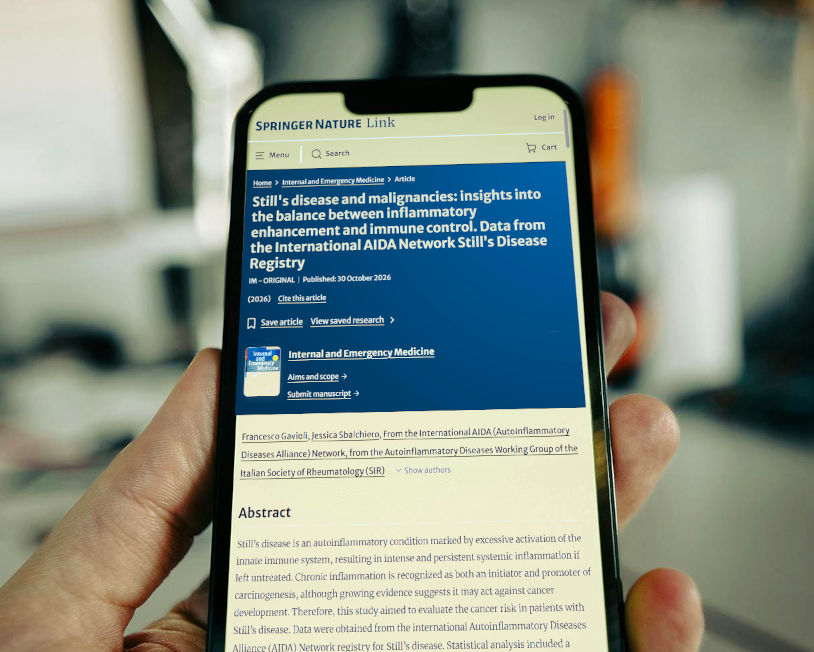
Still’s Disease and Malignancies: New Insights Into the Relationship Between Systemic Inflammation and Cancer From the AIDA Network Registry
A new international study published in 'Internal and Emergency Medicine' explores the occurrence of malignancies in Still’s disease, identifying prolonged fever during disease flares as a potential marker of increased cancer risk.
Link to article
A new study based on data from the international AIDA Network Still’s Disease Registry has been published in Internal and Emergency Medicine, shedding light on the complex relationship between systemic inflammation and malignancy in patients with Still’s disease.
The analysis included 626 patients with Still’s disease, of whom 14 (2.2%) had a documented history of malignancy, accounting for 15 malignant neoplasms. Patients with a history of malignancy were older at disease onset and diagnosis and experienced significantly longer fever duration during disease flares compared with patients without malignancy.
Using machine learning-based approaches and multivariable statistical modelling, the study identified prolonged fever duration as the only independent clinical variable associated with malignancy development. Specifically, each additional day of fever during disease flares was associated with a 0.2% increase in the estimated risk of malignancy (RR 1.002, 95% CI 1.000–1.004; p=0.01), an association that remained significant after adjustment for early biologic treatment.
These findings suggest that, although the observed prevalence of malignancy in this cohort was relatively modest, sustained and inadequately controlled systemic inflammation may contribute to cancer development in patients with Still’s disease. The results also highlight the complex, potentially bidirectional relationship between inflammation and tumorigenesis, in which inflammatory pathways may exert either pro-oncogenic or protective effects depending on the underlying biological mechanisms.
Once again, the AIDA Network Still’s Disease Registry demonstrates its value in generating international real-world evidence, expanding knowledge of disease-associated comorbidities and opening new perspectives for research into the long-term outcomes of patients with Still’s disease.