Research
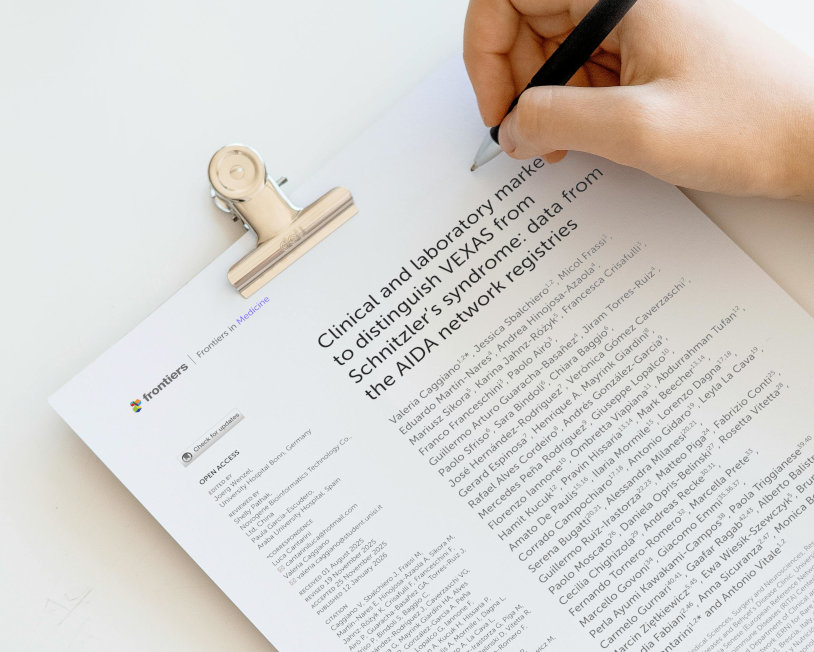
New Study from the AIDA Network Registries Helps Distinguish VEXAS from Schnitzler’s Syndrome
A new study based on data from the AIDA Network registries on VEXAS syndrome and Schnitzler’s syndrome has recently been published, providing important insights to improve the differential diagnosis between these two rare autoinflammatory conditions, which often share overlapping clinical and laboratory features.
Link to article
The research analyzed data from male patients enrolled in the international AIDA registries, comparing individuals with Schnitzler’s syndrome and patients with VEXAS presenting urticarial skin manifestations similar to those typically observed in Schnitzler’s syndrome.
The study found that VEXAS syndrome is more likely in patients with older age at disease onset, lymphadenopathy, anemia, and thrombocytopenia, particularly in the absence of leukocytosis. Among these factors, age at onset and lymphadenopathy emerged as the strongest independent predictors of VEXAS.
These findings highlight the importance of carefully evaluating clinical and laboratory features when assessing patients with suspected Schnitzler’s syndrome, in order to promptly identify possible cases of VEXAS and guide appropriate diagnostic testing and management.
This publication once again demonstrates the value of the AIDA Network registries in fostering international collaboration and advancing knowledge on rare and complex inflammatory diseases.