Research
New Study from the AIDA Network Behçet’s Disease Registry: Understanding the Risk of Eye Involvement
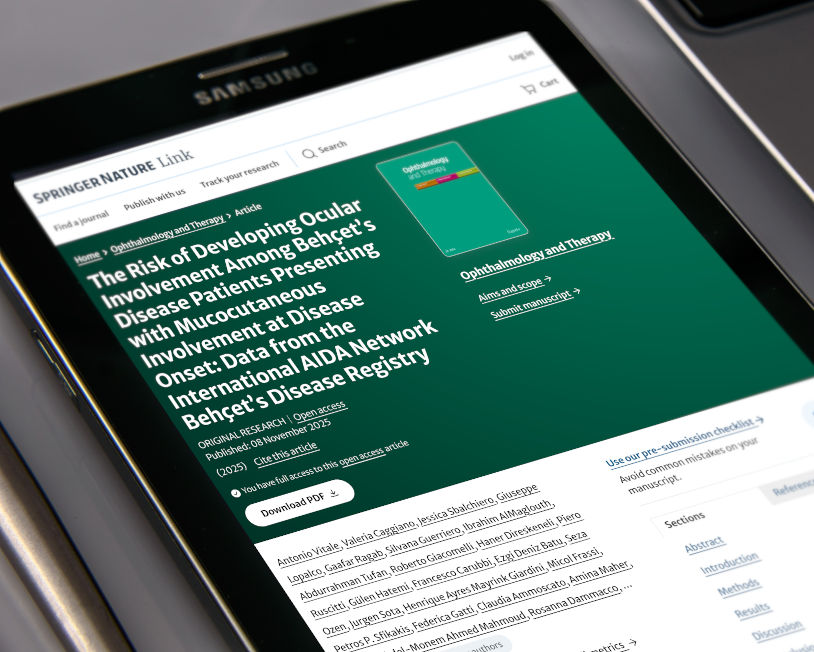
A new publication based on data from the International AIDA Network Behçet’s Disease Registry sheds light on an important question for both patients and clinicians: which individuals with Behçet’s disease (BD) who initially show only skin and mucosal symptoms are more likely to develop eye involvement later on?
Link to article
The study analyzed 328 patients who presented with mucocutaneous features—such as oral or genital ulcers and skin lesions—at the onset of the disease. Over time, 11% of these patients developed ocular inflammation, one of the most serious complications of BD.
The research identified several factors associated with a higher risk of developing eye involvement:
- Positive family history of Behçet’s disease
- Arab ethnicity
- Major oral ulcers
- The combination of pseudofolliculitis and erythema nodosum
- Genital aphthosis with more than five simultaneous ulcers (particularly in patients of Arab descent)
At the same time, the analysis found some protective factors, including:
- Being white / of European descent
- Having only one or two genital ulcers during flares
These findings help clarify which patient characteristics may predict the progression from mucocutaneous symptoms to eye inflammation. By identifying individuals at greater risk earlier in their disease course, clinicians can tailor monitoring strategies and intervene promptly when needed.
This study highlights once again the value of the AIDA Network registries in advancing our understanding of Behçet’s disease and improving patient care worldwide.