Research
New Insights from the AIDA Network Uveitis Registry: How Life Stages Influence Non-Infectious Uveitis
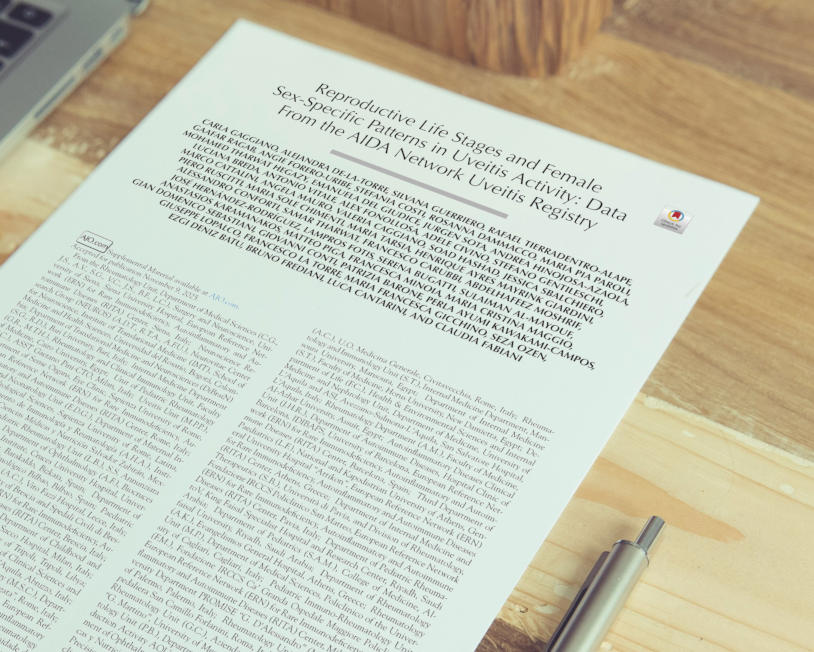
A new study based on data from the AIDA Network Uveitis Registry has just been published, offering important insights into how non-infectious uveitis (NIU) behaves across different phases of life—and how this may differ between women and men.
Link to article
The research included over 700 patients and examined whether uveitis activity changes during key reproductive life stages such as puberty, reproductive age, perimenopause, and post-menopause. These life stages were approximated based on age ranges derived from epidemiological data.
The study found that women experience notable variations in disease activity across these stages, while men do not show the same pattern. In particular:
- Perimenopause was associated with a peak in uveitis relapses, but only in women.
- Children in pre-puberty and early puberty showed higher levels of eye inflammation and were more likely to need systemic immunosuppressive treatments.
- Relapse frequency and inflammation levels varied significantly depending on the life stage, suggesting that hormonal and biological changes may play a role.
These results highlight the importance of considering a patient’s life stage when assessing uveitis activity, planning follow-up, and choosing treatment strategies. Understanding how NIU behaves over time can help clinicians better anticipate flare-ups and provide more personalized care.
This new publication confirms once again how the AIDA Network registries contribute to advancing knowledge and improving the management of complex inflammatory diseases.