Research
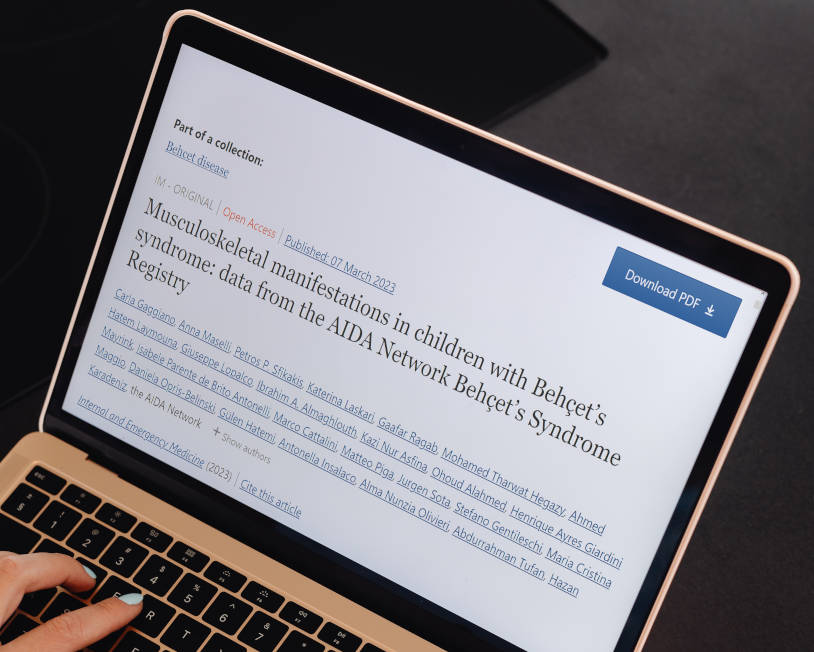
Musculoskeletal manifestations in children with Behçet’s syndrome: data from the AIDA Network Behçet’s Syndrome Registry
The results of a novel study on juvenile Behçet's syndrome based on the AIDA Network Behçet's Syndrome Registry have been recently published in Internal and Emergency Medicine.
Link to article
Musculoskeletal symptoms are reported by over one-third of children affected by Behçet's syndrome, ranking among the most common complaints in this age group. This study aimed to characterize musculoskeletal manifestations in children with Behçet's syndrome highlighting the frequency of co-existing clinical manifestations, the overall response to different treatment regimens, and the long-term prognosis of this subset of patients. We retrieved from the AIDA Network Behçet's Syndrome Registry data about 141 patients with juvenile Behçet's syndrome, 37 of whom had musculoskeletal manifestations at disease onset. Follow-up data were available up to 22 years of disease duration, allowing a thorough analysis of the long-term musculoskeletal prognosis of these children. We observed a frequent association of musculoskeletal and mucocutaneous manifestations, specifically with recurrent oral and genital ulcers and pseudofolliculitis. We described a typical pattern of arthritis, that is oligo- or mono-articular, chronic-recurrent, non-erosive in most children; however, we observed that sacroiliitis is not uncommon and about 1 out of 5 cases of arthritis may lead to joint erosions. Finally, the general and articular prognosis of this specific subset of children with Behçet's syndrome was favourable, although myalgia negatively affected response to biologic therapies.