Research
Machine Learning Helps Predict Macrophage Activation Syndrome in Still’s Disease
New collaborative study from the AIDA Network Still’s Disease Registry and the GIRRCS AOSD Study Group identifies key clinical predictors of MAS through advanced machine learning techniques.
Link to article
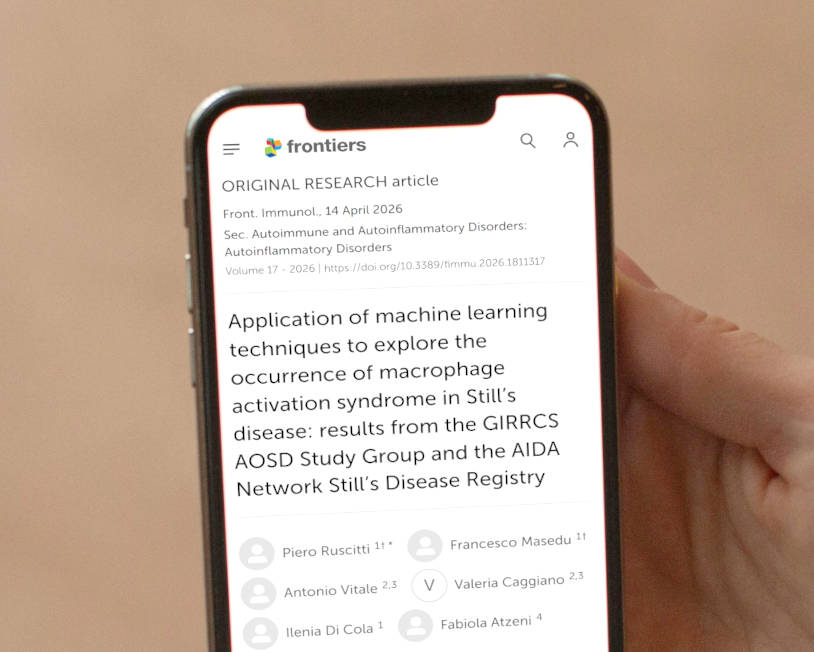
A new international collaborative study based on data from the AIDA Network Still’s Disease Registry and the GIRRCS AOSD Study Group has been published under the title “Application of machine learning techniques to explore the occurrence of macrophage activation syndrome in Still’s disease.” The study represents an important step forward in the identification of patients at increased risk of macrophage activation syndrome (MAS), one of the most severe and potentially life-threatening complications of Still’s disease.
The analysis included 737 patients with Still’s disease collected through the collaborative efforts of the GIRRCS AOSD Study Group and the AIDA Network. Using several machine learning approaches — including regression models, decision trees, and random forest analyses — investigators explored the variables most strongly associated with MAS occurrence.
The study highlighted the major predictive role of hyperferritinaemia, elevated C-reactive protein (CRP), higher systemic score, and older age at disease onset. In particular, the combination of ferritin ≥ 4,178.10 ng/mL, CRP ≥ 27.15 mg/L, systemic score ≥ 7, and age ≥ 45 years identified patients with the highest estimated probability of MAS.
These findings provide the basis for a clinician-friendly algorithm that may support early risk stratification and improve the recognition of MAS in daily clinical practice. The study also further demonstrates the scientific value of international collaborative registries such as the AIDA Network in generating high-quality real-world evidence in rare autoinflammatory diseases.