Research
Efficacy of Streptococcus salivarius K12 in PFAPA syndrome: Preliminary data from the AIDA Network
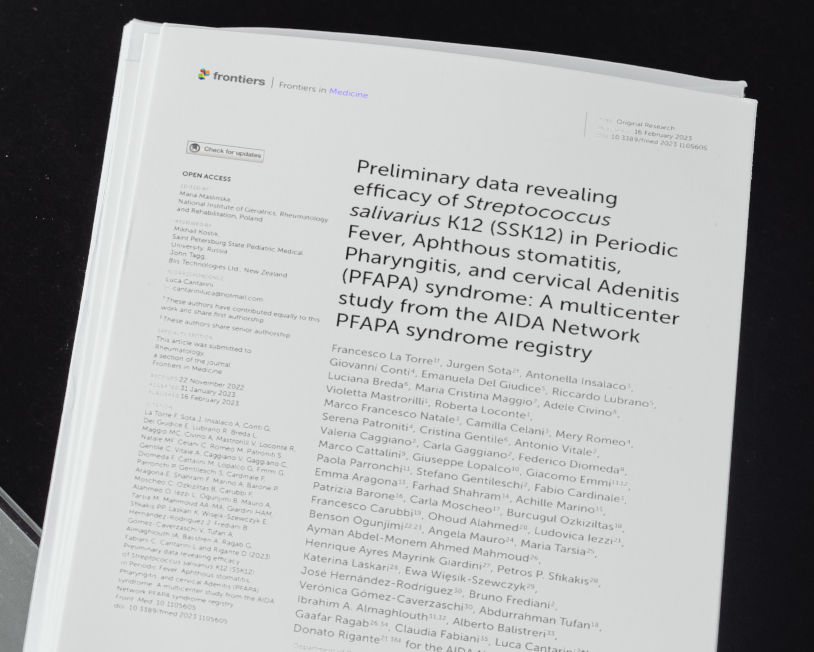
Multicenter study investigating SSK12 efficacy in PFAPA syndrome: experience from the international AIDA Network PFAPA syndrome registry
Link to article
Based on recent findings, Streptococcus salivarius K12 (SSK12) has been proposed as a complementary treatment tool to optimize the management of Periodic Fever, Aphthous stomatitis, Pharyngitis, and cervical Adenitis (PFAPA) syndrome.
In the present study the potential role of SSK12 in controlling febrile flares was evaluated. Further aims were to assess the impact of SSK12 on flare duration, the effects on body temperature, the ability to taper steroids, and change in accompanying symptoms before and after SSK12 introduction. We examined medical charts from 85 pediatric patients with PFAPA syndrome (49 males and 36 females) enrolled in the AIDA registry and treated with SSK12 for a median period of 6.00 months.
The number of febrile flares significantly decreased comparing the 12 months before. The duration of fever was significantly reduced from 4 to 2 days. Similarly, the highest temperature in °C was lower in the last follow-up assessment compared to the period prior to SSK12 start. Steroid load of betamethasone (or any equivalent steroid) significantly decreased between 12 months before treatment with SSK12 and the last follow-up visit. Finally, the number of patients experiencing symptoms including pharyngitis/tonsillitis, oral aphthae and cervical lymphadenopathy significantly decreased following SSK12.
SSK12 prophylaxis given for at least 6.00 months was found to reduce febrile flares of PFAPA syndrome: in particular, it halved the total number per year of fever flares, shortened the duration of the single febrile episode, lowered body temperature by 1 °C during febrile attacks flare, provided a steroid-sparing effect, and significantly reduced the accompanying symptoms related to the syndrome.