Research
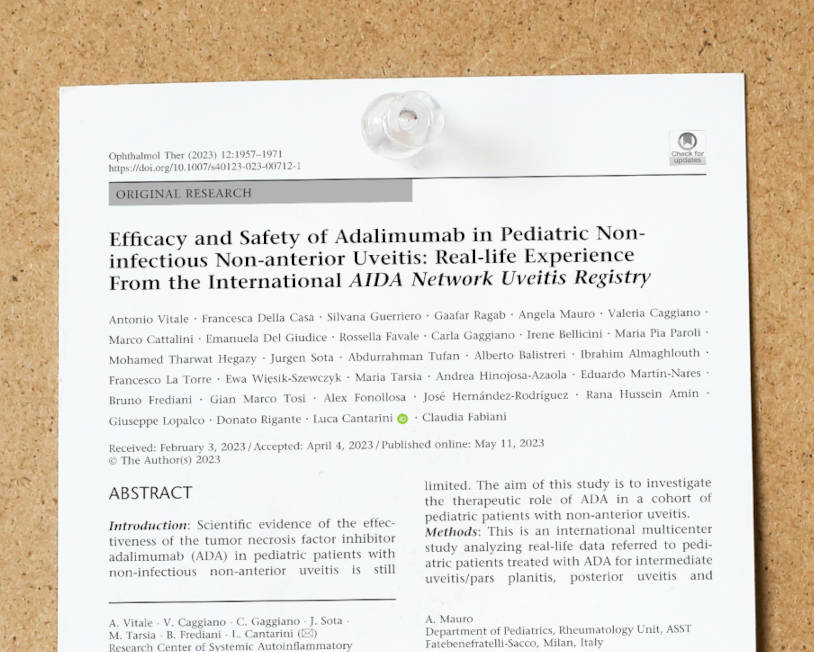
Adalimumab effectiveness for pediatric non-infectious non-anterior uveitis
Drawing data from the Uveitis AIDA international registry, this new study provides insights on the effectiveness and safety of adalimumab for non-anterior uveitis in the pediatric setting
Link to article
In this extensive study, we have explored the effectiveness and safety of adalimumab in treating severe non-anterior uveitis in pediatric patients, drawing upon data from the AIDA Network registries. Adalimumab demonstrated significant control of intraocular inflammation even in severe and recalcitrant cases, which is crucial in preventing severe visual loss and ocular complications like cataracts, glaucoma, amblyopia, and cystoid macular edema. It also proved effective in addressing retinal vasculitis. Results showcased diverse responses, but all were remarkably favorable. Some children achieved complete remission, while others experienced a substantial reduction in ocular flare-ups n terms of frequency and/or severity of manifestations. Importantly, none were considered unresponsive to treatment. The glucocorticoid-sparing effect was notable, reducing reliance on these drugs, which should be limited due to their potential side effects. Visual acuity improved in most cases, even for those with severe ocular complications at the study's outset. Adalimumab's safety profile was favorable, with minimal adverse events noted. This research underscores adalimumab's potential as a reliable treatment option for pediatric non-anterior uveitis, enhancing the quality of life for these young patients. In summary, based on data from the AIDA Network registry dedicated to uveitis, this study provides compelling evidence of adalimumab's effictiveness and safety in pediatric non-anterior uveitis. It offers hope for improved management of this challenging condition in young patients, increasing the chance for saving visual function in the long-term.